Training Breaks the Body Down — Recovery Builds It Back Up
Most people believe fitness improvements come from pushing harder in the gym.
Lift heavier. Run faster. Train longer.
But physiology tells a different story.
Your body does not get stronger during training. It gets stronger during recovery.
Exercise places stress on the body, creating microscopic damage in muscle tissue and temporarily increasing inflammation. This stress is necessary for adaptation — but the actual repair and strengthening occur afterwards.
Without proper recovery, fatigue accumulates, performance plateaus and injury risk increases.
This is why athletes and everyday exercisers are increasingly turning to structured recovery methods such as:
Together, these tools help support the body’s natural recovery processes.
What Happens to the Body After Training
When you train intensely, your body undergoes several physiological responses:
• microscopic muscle fibre damage • inflammation • depletion of energy stores • nervous system fatigue
This repair process is responsible for Delayed Onset Muscle Soreness (DOMS) — the stiffness and soreness many people feel 24–72 hours after exercise.
Recovery strategies aim to support this process by:
✔ improving circulation ✔ assisting metabolic waste removal ✔ managing inflammation ✔ helping the nervous system return to balance
“Training provides the stimulus. Recovery allows adaptation.”
Cold Plunge Therapy
Cooling the Body to Manage Inflammation
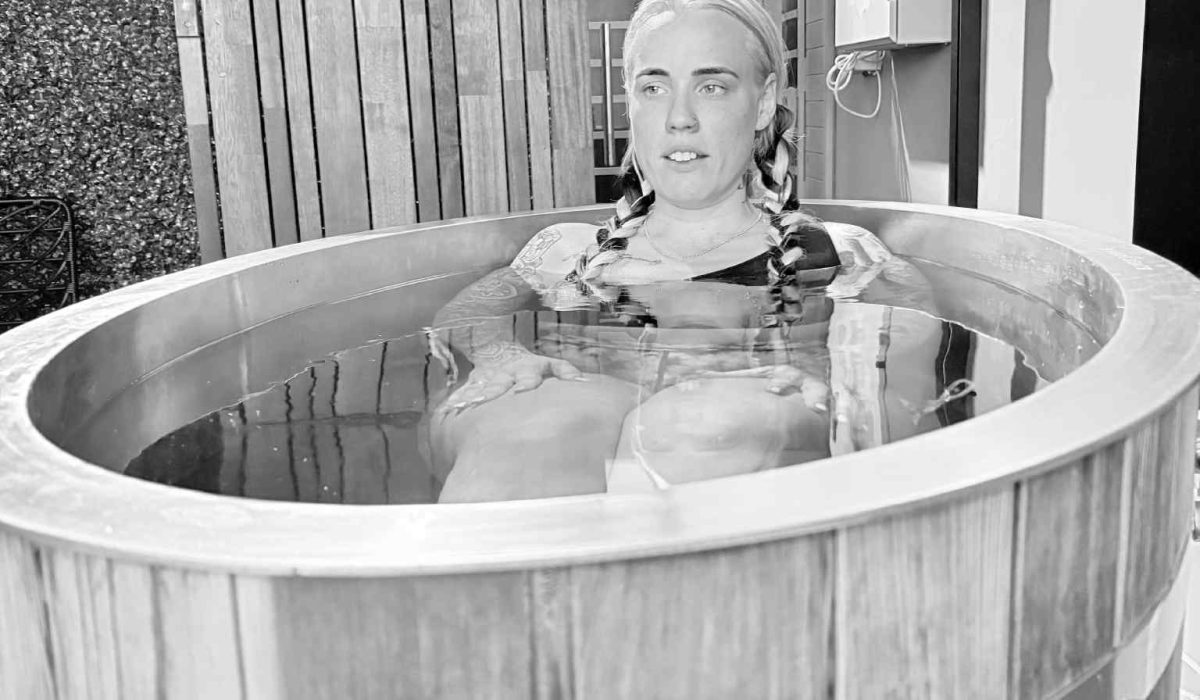
Cold water immersion — commonly called cold plunging — is one of the most researched recovery methods in sports science.
Cold exposure lowers tissue temperature and causes vasoconstriction, meaning blood vessels temporarily narrow. This may reduce swelling and inflammatory responses following intense exercise.
When the body warms again after the cold exposure, circulation increases — potentially helping remove metabolic by-products produced during training.
Research published in the British Journal of Sports Medicine has shown that cold water immersion can reduce delayed muscle soreness following strenuous exercise when compared with passive recovery.
Typical cold plunge protocols include:
• 1–15 minutes immersion • water temperature around 10–15°C
Cold plunging is often used on rest days to allow for muscle adaptations or hours after weight training.
Infrared Sauna
Heat, Circulation and Muscle Relaxation
Heat therapy has been used in recovery for centuries, and infrared saunas offer a modern version of this approach.
Infrared wavelengths heat the body directly, increasing core body temperature and stimulating circulation.
Heat exposure causes vasodilation, meaning blood vessels widen. This increased circulation may help:
• deliver oxygen and nutrients to muscles • remove metabolic waste • reduce muscle stiffness • promote relaxation
Research also suggests that heat exposure stimulates heat shock proteins, which play a role in cellular repair and stress protection.
For many people, sauna sessions also provide a mental reset — helping reduce stress and promote relaxation after demanding training sessions.
Compression Therapy
Supporting Circulation and Fluid Movement
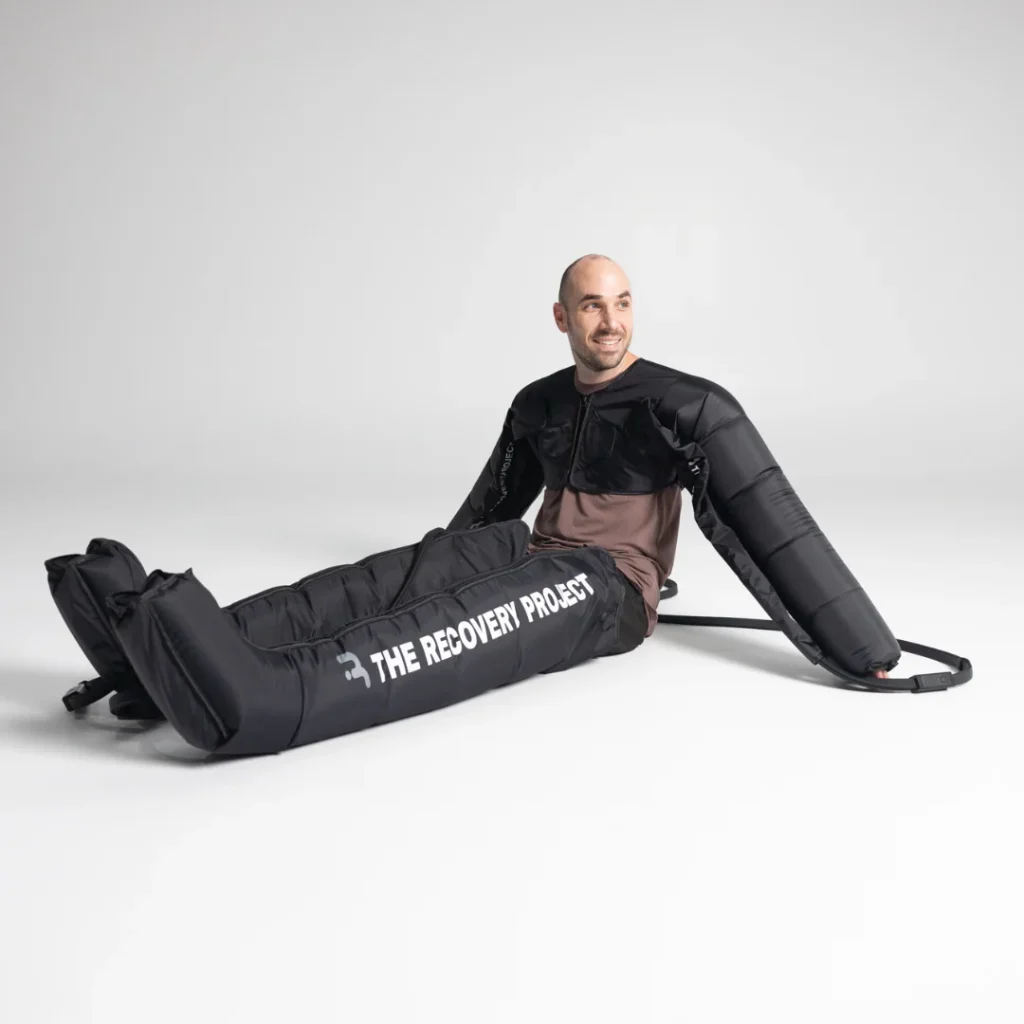
Compression therapy uses pneumatic boots that rhythmically inflate and deflate around the legs.
This sequential pressure encourages fluid movement through blood vessels and lymphatic pathways.
Although performance outcomes vary between studies, many athletes report feeling less fatigued and more recovered following compression therapy sessions.
Why Combining Recovery Methods Works
Each recovery tool works through a different physiological mechanism.
Recovery Method
Primary Effect
Cold Plunge
Reduces inflammation and soreness
Sauna
Improves circulation and relaxation
Compression
Supports fluid movement and circulation
Together, these methods may support multiple aspects of the recovery process.
For example:
Cold plunge may reduce soreness. Sauna may improve circulation and relaxation. Compression therapy may assist fluid movement and reduce swelling.
This is why many recovery centres combine all three approaches.
Recovery Is the Missing Piece of Training
For years, recovery was considered something only elite athletes needed.
Today we understand that anyone who trains regularly benefits from proper recovery.
Recovery strategies help people:
• maintain consistent training • reduce soreness and fatigue • manage stress • support long-term performance
The goal is not simply to train harder.
It is to train sustainably.
Because sustainable training leads to better results.
Train. Recover. Repeat.
The most effective training programs don’t just focus on effort — they focus on balance.
When training and recovery work together, the body can adapt, improve and perform at its best.